


Currency
 AED
AED
 AFN
AFN
 ALL
ALL
 AMD
AMD
 ANG
ANG
 AUD
AUD
 AWG
AWG
 AZN
AZN
 BAM
BAM
 BBD
BBD
 BDT
BDT
 BIF
BIF
 BND
BND
 BOB
BOB
 BSD
BSD
 BWP
BWP
 BZD
BZD
 CAD
CAD
 CDF
CDF
 CHF
CHF
 CLP
CLP
 CNY
CNY
 CRC
CRC
 CVE
CVE
 CZK
CZK
 DJF
DJF
 DKK
DKK
 DOP
DOP
 DZD
DZD
 EGP
EGP
 ETB
ETB
 EUR
EUR
 FJD
FJD
 FKP
FKP
 GBP
GBP
 GMD
GMD
 GNF
GNF
 GTQ
GTQ
 GYD
GYD
 HKD
HKD
 HNL
HNL
 HUF
HUF
 IDR
IDR
 ILS
ILS
 INR
INR
 ISK
ISK
 JMD
JMD
 JPY
JPY
 KES
KES
 KGS
KGS
 KMF
KMF
 KRW
KRW
 KYD
KYD
 KZT
KZT
 LBP
LBP
 LKR
LKR
 MAD
MAD
 MDL
MDL
 MKD
MKD
 MMK
MMK
 MNT
MNT
 MUR
MUR
 MVR
MVR
 MWK
MWK
 NGN
NGN
 NIO
NIO
 NOK
NOK
 NPR
NPR
 NZD
NZD
 PEN
PEN
 PGK
PGK
 PKR
PKR
 PYG
PYG
 QAR
QAR
 RON
RON
 RSD
RSD
 RWF
RWF
 SAR
SAR
 SBD
SBD
 SEK
SEK
 SGD
SGD
 SHP
SHP
 SLL
SLL
 STD
STD
 TJS
TJS
 TOP
TOP
 TRY
TRY
 TTD
TTD
 TZS
TZS
 UAH
UAH
 UGX
UGX
 USD
USD
 UYU
UYU
 UZS
UZS
 VND
VND
 VUV
VUV
 WST
WST
 XAF
XAF
 XCD
XOF
XPF
XCD
XOF
XPF
 YER
YER
 ZAR
ZAR


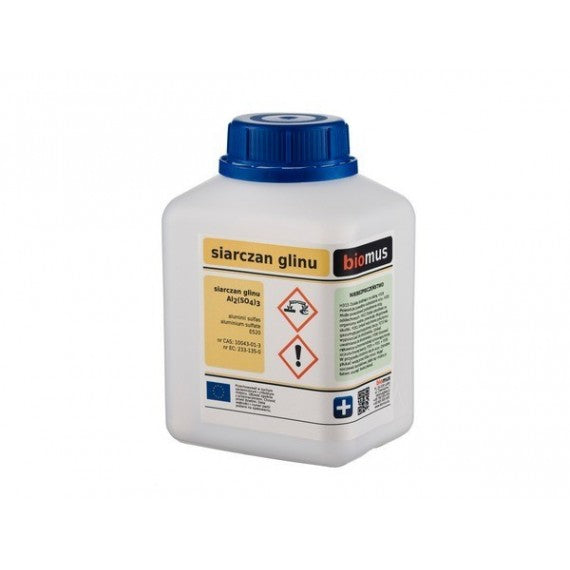
Shipping already possible within 24 hours.
Description
xAluminum sulfate 250g BIOMUS
Technical information on chemical reagents:
- Synonyms: Aluminum sulfates, Aluminum sulfate, E520
- Genre: Clean
- Chemical formula: Al₂(SO₄)₃
- CAS number: 100043-01-3
- EC number: 233-135-0
- Net weight: 250g
Examples of professional applications in various industries:
- Water treatment: Flocculant: Aluminum sulfate is used in water treatment as a flocculant. It helps aggregate suspended particles and impurities in water so they can be more easily removed. This improves the clarity and quality of drinking water and wastewater.
- Paper industry: Paper production: In the paper industry, aluminum sulfate serves as a filler and sizing agent. It helps improve the strength and smoothness of paper and enhances print quality.
- Construction industry: Concrete additive: Aluminum sulfate is used in the construction industry as a concrete additive. It accelerates the setting time of concrete and is particularly used for work in cold weather.
- Textile industry: Mordant and dyeing: In the textile industry, aluminum sulfate is used as a mordant. It helps fix dyes on textiles, making the colors more intense and durable.
- Agriculture: Soil conditioner: In agriculture, aluminum sulfate is used as a soil conditioner to lower soil pH. It is often used in gardens and agricultural fields to create acidic soil conditions beneficial for certain plant species.
- Cosmetics industry: Astringent in deodorants: In the cosmetics industry, aluminum sulfate is used as an astringent active ingredient in deodorants and antiperspirants. It helps reduce sweat production and control body odor.
- Medical applications: Astringent: Aluminum sulfate is used in medical applications as an astringent. It can be used to treat minor skin injuries, abrasions, and insect bites to stop bleeding and promote healing.
- Fireworks industry: Colorant for fireworks: In the fireworks industry, aluminum sulfate is used as a component of colorant mixtures. It helps create vibrant colors in fireworks.
- Wastewater treatment plants: Clarifying agent: In wastewater treatment plants, aluminum sulfate is used for wastewater treatment. It helps remove organic and inorganic impurities, contributing to improved water quality.
Recommended storage conditions:
- Aluminum sulfate should be stored in a dry and cool place.
- Avoid contact with moisture and direct sunlight.
- Store in original packaging or in tightly sealed containers.
- Keep away from strongly odorous chemical substances and hazardous materials.
- Observe all applicable regulations for the storage and transport of chemical raw materials.
Aluminum sulfate should be stored in a dry and cool place, away from heat sources and fire. The product should be kept in tightly sealed containers, away from strongly odorous chemical substances and hazardous materials. Contact with moisture and direct sunlight should be avoided. Additionally, all applicable regulations for the storage and transport of chemical raw materials should be observed.
Hazards
- H315: Causes skin irritation.
- H318: Causes serious eye damage.
- H335: May cause respiratory irritation.
- H412: Harmful to aquatic life with long-lasting effects.
Safety instructions
- P261: Avoid breathing dust/fume/gas/mist/vapors/spray.
- P273: Avoid release to the environment.
- P280: Wear protective gloves/protective clothing/eye protection/face protection.
- P305 + P351 + P338: IF IN EYES: Rinse cautiously with water for several minutes. Remove contact lenses, if present and easy to do. Continue rinsing.
Recommended storage conditions
Aluminum sulfate should be stored in a dry, cool, and well-ventilated place, away from heat sources and fire. The product should be kept in original packaging or in appropriately labeled containers. Contact with incompatible and hazardous chemicals should also be avoided. Storage should comply with all required safety and hygiene regulations.
Markings on the packaging






- Choosing a selection results in a full page refresh.